The Monday Bill: Managing Weekend Warrior Soreness at Your Desk
Quick Answer: DOMS peaks 24–72 hours after the effort, which is why Saturday’s hike bills you on Monday morning. Manage it with hourly movement, a lunch walk, extra water, and protein at dinner — then wait until Wednesday for your next real session. The prevention is a single midweek strength snack, which meaningfully reduces the following Monday’s soreness.
The weekend warrior’s calendar has one recurring appointment nobody puts in it: the Monday bill.
Saturday’s hike or Sunday’s league game, invoiced as desk-day soreness, peaking exactly at the 48-hour mark — which lands mid-meeting, on the stairs, in front of colleagues.
It’s completely on schedule. Here’s how to negotiate the amount.
Why Does Soreness Peak on Monday, Not Sunday?
Because delayed-onset muscle soreness runs on a predictable arc.
Onset begins in the first day. Peak falls between 24 and 72 hours — for a Saturday afternoon effort, that’s Sunday night through Tuesday, with Monday sitting right in the middle. Resolution follows over the next couple of days.
So the meeting-day soreness isn’t bad luck. It’s the timetable working exactly as described.
Knowing the arc changes the experience. The Monday stairs stop being a worry and become a countdown — you know roughly when it turns, which is Wednesday.
What Can You Actually Do at a Desk?
Four things, all of them office-compatible.
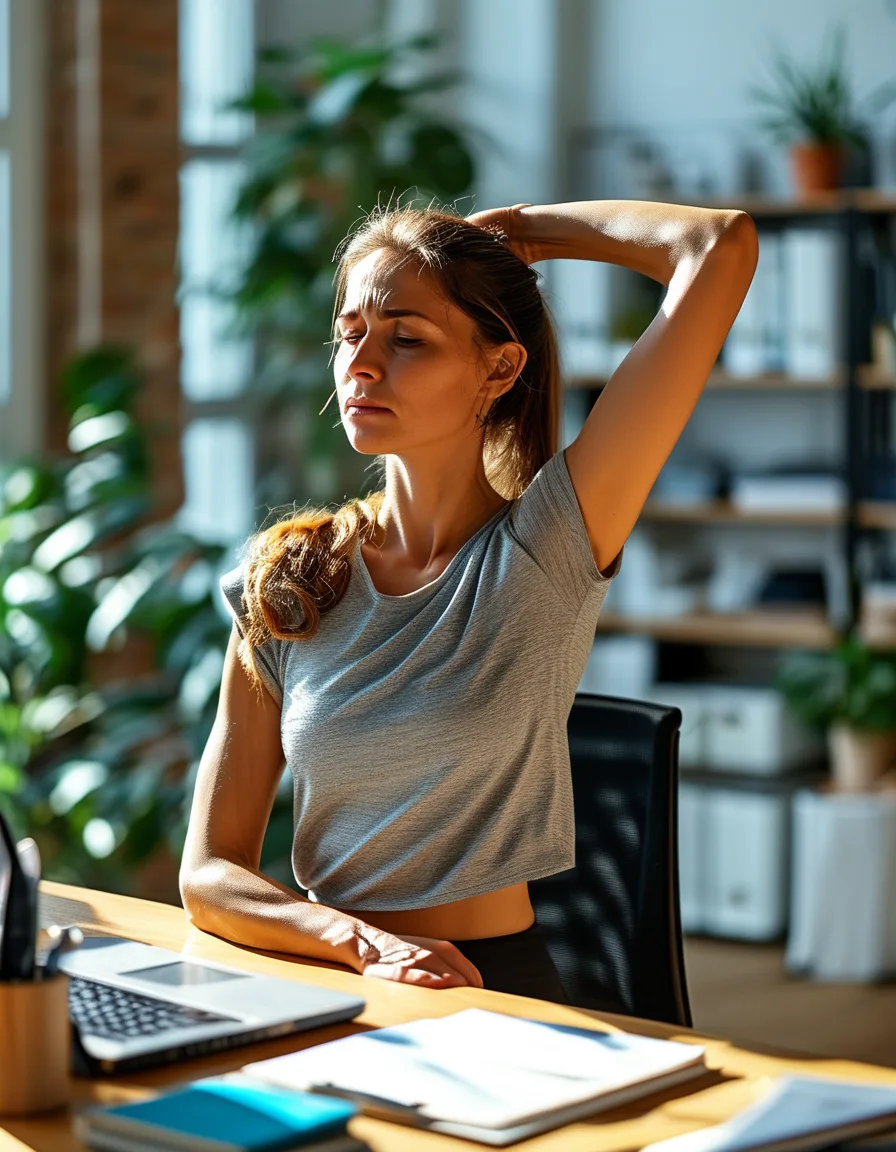
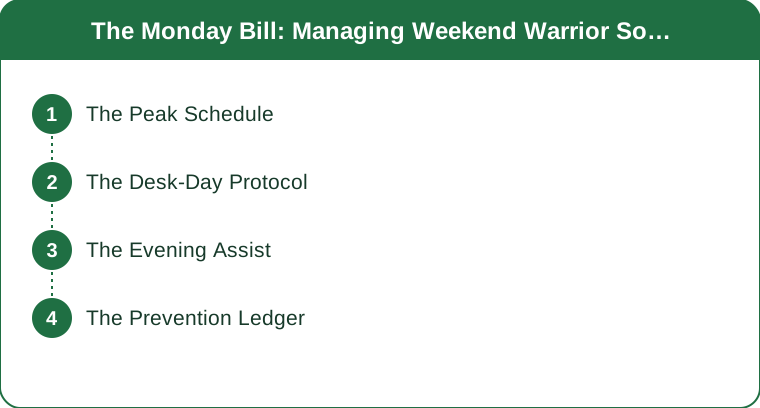
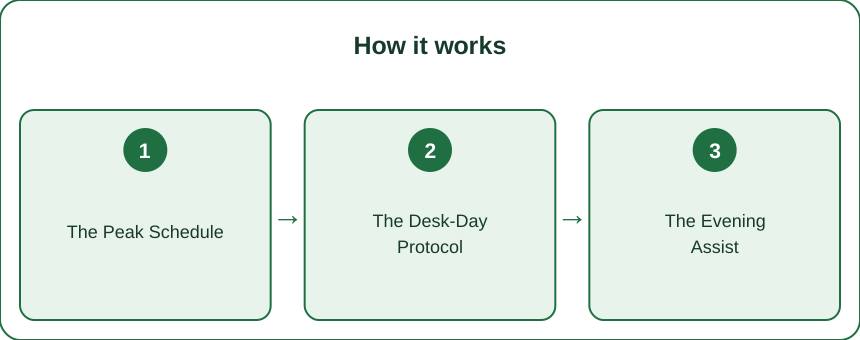
Move hourly. Soreness stiffens with stillness, and stillness is a desk’s default setting. Stand and walk for two minutes every hour. The walk to the printer counts double when you take the long way.
Take a lunch walk. Active recovery — light movement that increases blood flow without adding damage — is one of the better-supported ways to reduce how sore you feel. Fifteen to twenty minutes at an easy pace is plenty.
Drink more water than usual. Recovering muscle wants fluid, and most desk days undersupply it.
Use the under-desk stretches. Calf pumps, a seated figure-four, ankle circles, a gentle seated twist. All of these pass completely unremarked in any office.
None of this requires a gym, a change of clothes, or explaining yourself.

What Helps in the Evening?
The recovery walk proper — 20–30 minutes, easy pace, no agenda.
Compression. Compression socks or tights in the evening help some people noticeably with heavy, achy legs.
A warm shower. Simple, and the blood-flow contribution is real.
Protein at dinner. Repair duty. Aim for a solid serving rather than a token one — roughly 25–40g depending on your size.
What’s not on the list: a punishing Monday workout. The repair site does not need a second demolition. The week’s first real session waits until Wednesday-ish, when the soreness has turned and the tissue has done its work.
Training through peak DOMS is how people convert a sore Monday into a strained Thursday.
How Do You Make Next Monday Cheaper?
Three levers, in order of impact.
1. The midweek micro-dose. This is the big one. A single 15–20 minute strength session on a Wednesday substantially reduces the following weekend’s soreness, because muscles visited weekly bill far more gently than muscles visited monthly. The effect — a workout protecting you from soreness in later workouts — is well documented, and it’s the whole argument for not being a purely weekend athlete.
2. Warm up properly. Cold-start efforts write the worst Mondays. Ten minutes of easy movement before the game or the hike changes the invoice meaningfully.
3. Respect the eccentrics. The muscle damage that causes DOMS comes mostly from lengthening contractions — the downhill portion of a hike, the deceleration in a game. If Saturday involves a lot of descending, train some downhill or some slow eccentric work beforehand.
5 Mistakes Everyone Makes
- Sitting completely still on Monday. The most common and the most counterproductive. Stiffness compounds with stillness.
- Doing a hard session on Monday to “work it out.” You’ll feel briefly better and recover slower.
- Only training on weekends. The novelty is what’s expensive. One midweek session changes the whole picture.
- Skipping the warm-up because you’re only “playing.” Cold starts produce the worst Tuesdays.
- Underestimating downhill. People plan for the climb and get wrecked by the descent.
FAQ
Is soreness a sign of a good workout?
Not reliably. DOMS tracks novelty and eccentric load more than it tracks training quality. You can make excellent progress with very little soreness once your body is used to the movement.
Should I stretch when I’m sore?
Gentle movement helps; aggressive static stretching of very sore muscles doesn’t reduce DOMS and can aggravate it. Keep stretches easy and short while you’re in the peak window.
How long should soreness last?
Typically three to five days from onset, with the worst at 24–72 hours. If it’s still severe past a week, or if it’s sharp and localized rather than diffuse and achy, that’s worth getting looked at.
Do ice baths or massage guns help?
Both can reduce how sore you feel, with modest evidence. Neither speeds actual tissue repair much. Use them for comfort, not as a strategy — the midweek session does far more.
TL;DR:
- DOMS peaks 24–72 hours after effort, which puts Saturday’s game on Monday’s calendar
- Desk protocol: move hourly, walk at lunch, drink more water, use seated stretches
- Evening: easy walk, compression, warm shower, protein at dinner
- Do not do a hard session on Monday — the first real one waits until Wednesday
- Prevention: one midweek strength session halves the novelty effect
- Warm up properly; cold starts write the worst Mondays
- Downhill and deceleration cause more soreness than climbing
Move hourly, walk at lunch, real session Wednesday, midweek micro-dose as insurance. The Monday bill was always scheduled — the protocol just negotiates the amount.
Diffuse, achy, both-sides soreness is normal. Sharp, one-sided pain, swelling, or dark urine after a very hard effort is not — that last one warrants same-day medical attention.
Keep Reading
This article is for general informational and styling purposes only. Fit, sizing, and product availability may vary.