The Monday-Tuesday Buffer Mistake That's Making Weekend Workouts Wreck Your Week
Quick Answer: Weekend warriors who go all-out both Saturday and Sunday often carry compounded soreness into Monday and Tuesday because there’s no recovery day between the two hard efforts. Inserting even a short, easy movement session (a 20-minute walk or light mobility work) on Sunday evening or building one lighter of the two weekend days reduces the carryover significantly without cutting total weekly effort much.
Saturday’s hike felt great. Sunday’s long ride felt great too. Monday, your legs feel like lead at your desk and Tuesday isn’t much better. That’s not overtraining in the classic sense — it’s a missing buffer between two hard days stacked back to back.

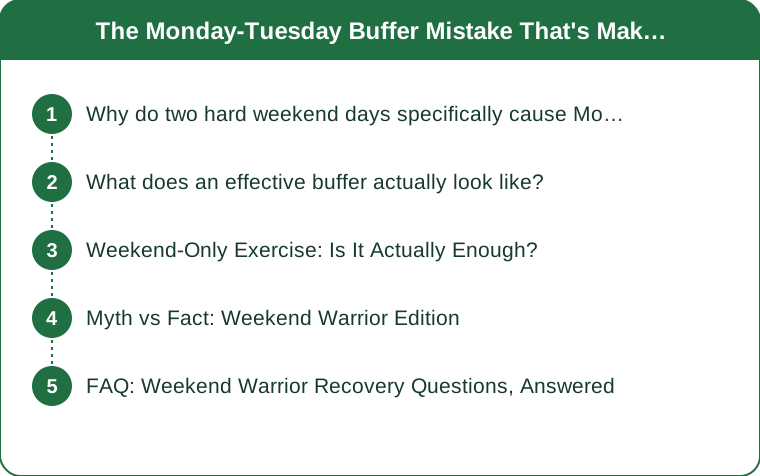
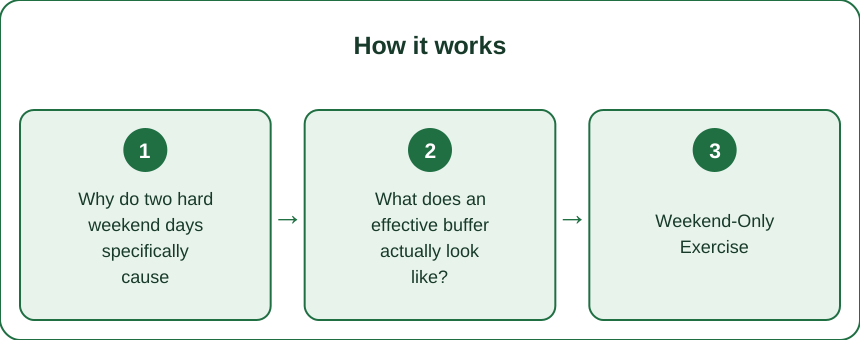
Why do two hard weekend days specifically cause Monday-Tuesday problems?
Back-to-back hard training days without a recovery day between them compounds fatigue in a way that a single hard day followed by rest doesn’t. Muscle glycogen and connective tissue repair need roughly 24-48 hours per hard session — stacking two hard sessions consecutively pushes that repair debt into the following work week instead of resolving it over the weekend.
This is specifically a ‘weekend warrior’ pattern because the compressed hard-training window (2 days) doesn’t leave room for the buffer a more spread-out weekly schedule would naturally include.
What does an effective buffer actually look like?
Two workable approaches: make one of the two weekend days meaningfully easier (Saturday hard, Sunday an easy walk or gentle yoga instead of another hard session), or add a short active-recovery session Sunday evening (20 minutes of walking or light mobility work) specifically to promote blood flow and reduce the stiffness that compounds overnight.
Either approach preserves most of the weekend’s training benefit while reducing the fatigue debt carried into Monday.

Weekend-Only Exercise: Is It Actually Enough?
Two hard sessions on the weekend can meet general activity guidelines in terms of total volume, but the concentrated fatigue pattern is real and worth planning around — it’s less about whether weekend-only training ‘counts’ and more about managing the recovery math of doing a week’s training in two days.
Myth vs Fact: Weekend Warrior Edition
Myth: Soreness on Monday means Saturday’s workout was more effective. Fact: Excessive carryover soreness more often reflects insufficient recovery buffer than superior training effect — a well-buffered weekend can produce similar fitness gains with less Monday impact.
Myth: You need a full rest day, not just an easy one, between hard weekend sessions. Fact: Active recovery (light movement) often reduces stiffness more effectively than complete rest, since gentle movement promotes blood flow without adding load.
Myth: Weekend warriors are at the same injury risk as people who train evenly through the week. Fact: Research does suggest concentrated weekend-only training carries somewhat different injury considerations than spread-out training — building in the buffer day is part of managing that difference, not just a comfort preference.
FAQ: Weekend Warrior Recovery Questions, Answered
Should I always make Sunday the easier day if Saturday was hard?
Not necessarily always Sunday specifically — the key is that whichever day comes second should be lighter, or a short recovery session should bridge into Monday.
Does stretching on Sunday night actually reduce Monday soreness?
Light mobility work and gentle movement can meaningfully reduce next-day stiffness by promoting blood flow, though it won’t eliminate soreness from a genuinely hard effort entirely.
Is it better to do one long hard session or two shorter ones on the weekend?
For recovery purposes, one hard session plus one easy session generally leaves you in better shape for Monday than two hard sessions of any length back to back.
TL;DR:
- Two hard days back to back on the weekend compounds fatigue into the work week
- Make one of the two days meaningfully easier, or add a short Sunday-evening active recovery session
- Carryover soreness reflects recovery buffer, not necessarily better training effectiveness
- One hard day plus one easy day usually beats two hard days for Monday readiness
Keep the weekend intensity you love — just stop stacking both days at maximum effort back to back.
Keep Reading
This article is for general informational and styling purposes only. Fit, sizing, and product availability may vary.