Why Sunday Feels Harder Than Saturday - the Hydration Carryover Nobody Tracks
Quick Answer: Fluid losses from a long session are frequently larger than what people replace in the hours afterwards, and thirst switches off well before the deficit is closed. Start Sunday down on fluid and electrolytes, and the same effort costs more. The fix happens Saturday evening, not Sunday morning. Replace with sodium alongside fluid, or much of it passes straight through.
Sunday is not harder because Saturday was hard.
Sunday is harder because Saturday evening was when you needed to fix it, and you were on the sofa.

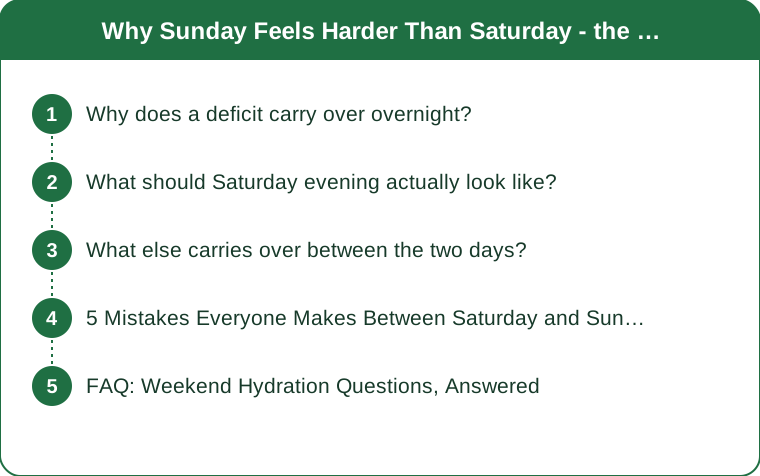
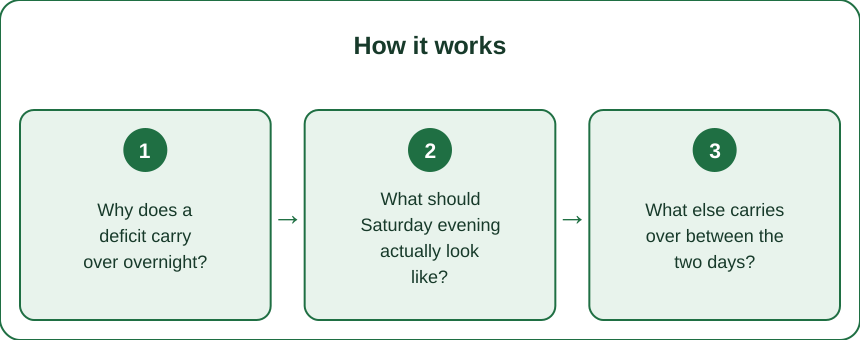
Why does a deficit carry over overnight?
Because replacement is slower and less complete than most people assume.
Thirst switches off before rehydration is complete. The signal that stops you drinking responds to changes that occur well before fluid balance is genuinely restored. Drinking to thirst under-replaces after heavy losses, reliably.
Fluid without sodium does not stay put. Drinking plain water after heavy sweating dilutes blood sodium slightly, which triggers urine output. A large share of it leaves again, which is why people report drinking constantly and still feeling flat.
Sweat losses are easy to underestimate. A long, warm outing can produce losses that are substantially higher than people guess, particularly when evaporation is efficient and you never feel drenched. A dry-feeling day can be a high-loss day.
Alcohol on Saturday evening compounds it. It increases urine output and disrupts sleep quality at the same time, which is a particularly unhelpful combination the night before a second big day. This is the single largest avoidable factor for many weekend warriors.
Sleep does not restore fluid. You continue losing fluid through breathing and sweating overnight, so you wake down further than you went to bed. Morning is the low point of the whole cycle.
And a small ongoing deficit affects performance more than people expect. Perceived effort rises, heat tolerance drops, and everything feels heavier at the same pace. It does not take much of a deficit to change how a day feels.
What should Saturday evening actually look like?
Deliberate replacement with sodium, spread over hours rather than in one go.
Weigh yourself before and after if you want real numbers. The weight difference immediately after a session is mostly fluid, and it converts directly into how much you need to replace. Most people are surprised the first time they do it.
Aim to replace more than you lost. Because some of what you drink will be lost as urine, replacing beyond the measured deficit is the standard guidance. Matching exactly leaves you short.
Include sodium with the fluid. Salt with a meal, an electrolyte drink, or salty food alongside water. Sodium is what allows the fluid to be retained rather than passed - this is the part most people skip entirely.
Spread it over the evening. A litre in one go largely leaves again; the same volume across three hours is retained far better. Rate matters as much as amount.
Eat a proper meal. Food contains both fluid and sodium, and a real dinner does more rehydration work than people credit. Skipping dinner after a long day is a common and costly move.
And check the colour in the morning. Pale straw suggests you are roughly there; dark suggests you are not. It is crude and it is good enough as a practical Sunday morning check.

What else carries over between the two days?
Fluid is the most fixable, and it is not the only one.
Glycogen takes time to replace. A long Saturday depletes muscle fuel stores, and refilling them requires eating carbohydrate through the evening rather than one meal. Under-eating on Saturday night is felt directly on Sunday.
Sleep quality often drops after a hard day. Late finishes, an elevated core temperature, and a large evening meal can all fragment sleep. The night between the two days is the one worth protecting most.
Muscle damage from the first day is real but not the main factor on day two. Peak soreness usually arrives at twenty-four to forty-eight hours, which means Sunday morning is often before the worst of it. Sunday heaviness is usually fuel and fluid, not damage.
Cumulative heat load matters in late summer. Two warm days back to back tax thermoregulation more than one, and the second day starts with less capacity. Cooler autumn weekends genuinely feel easier, and it is not imagination.
Salt losses vary a lot between people. Some people lose considerably more sodium in sweat than others, and heavy salt losers notice a two-day weekend far more. If you get white marks on clothing after drying, you are likely at that end.
And persistent fatigue that does not respond to food, fluid, and sleep is worth investigating. A weekend that leaves you flat for four days is a different pattern. That is worth a conversation with a doctor rather than more electrolytes. This is general information, not medical advice.
5 Mistakes Everyone Makes Between Saturday and Sunday
Drinking only plain water afterwards. Without sodium, a substantial share leaves as urine and the deficit persists. Water plus salt, or water plus a proper meal, is the actual fix.
Waiting until Sunday morning. You cannot rehydrate meaningfully in the twenty minutes before you leave, and drinking heavily at that point mostly produces a stop half an hour later. Saturday evening is the window.
Drinking to thirst and assuming that is enough. Thirst stops well short of full replacement after heavy losses. Deliberate intake beats waiting to feel like it.
Having a few drinks on Saturday night. Increased urine output and disrupted sleep, on the night that matters most. The most predictable Sunday-wrecker and the most popular.
Skipping the post-activity meal. No appetite after a long day is common, and skipping the meal costs both fluid and fuel. Something is meaningfully better than nothing, even if it is small.
And the bonus mistake: assuming a cool day means low losses. Cool weather suppresses thirst while you continue to sweat and lose fluid through breathing. Autumn dehydration is quieter, not smaller.
FAQ: Weekend Hydration Questions, Answered
Do I need a sports drink or is salt on food enough?
For most people, a normal meal with salt plus water does the job perfectly well. Electrolyte products are convenient, particularly when appetite is low after a long day, but they are not required.
How do I know how much I actually lost?
Weigh yourself before and after in similar clothing. The difference is mostly fluid, and replacing somewhat more than that over the following hours is the standard approach.
Is it possible to drink too much?
Yes - drinking large volumes of plain water quickly can dilute blood sodium, which is genuinely dangerous. Include sodium and spread the intake out, and if you ever feel confused, nauseous, or unusually swollen after drinking heavily, seek medical help.
TL;DR:
- Thirst switches off before rehydration is complete - drinking to thirst under-replaces after long days.
- Fluid without sodium largely leaves again, which is why constant drinking still feels insufficient.
- Saturday evening is the window, spread over hours, alongside a real meal.
- Alcohol on Saturday night is the most predictable Sunday-wrecker: more urine output, worse sleep.
- Cool weather suppresses thirst without reducing losses - autumn deficits are quieter, not smaller.
This weekend, weigh yourself before and after Saturday’s session. The number usually changes how the whole evening gets planned.
Keep Reading
This article is for general informational and styling purposes only. Fit, sizing, and product availability may vary.